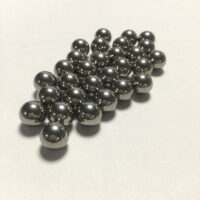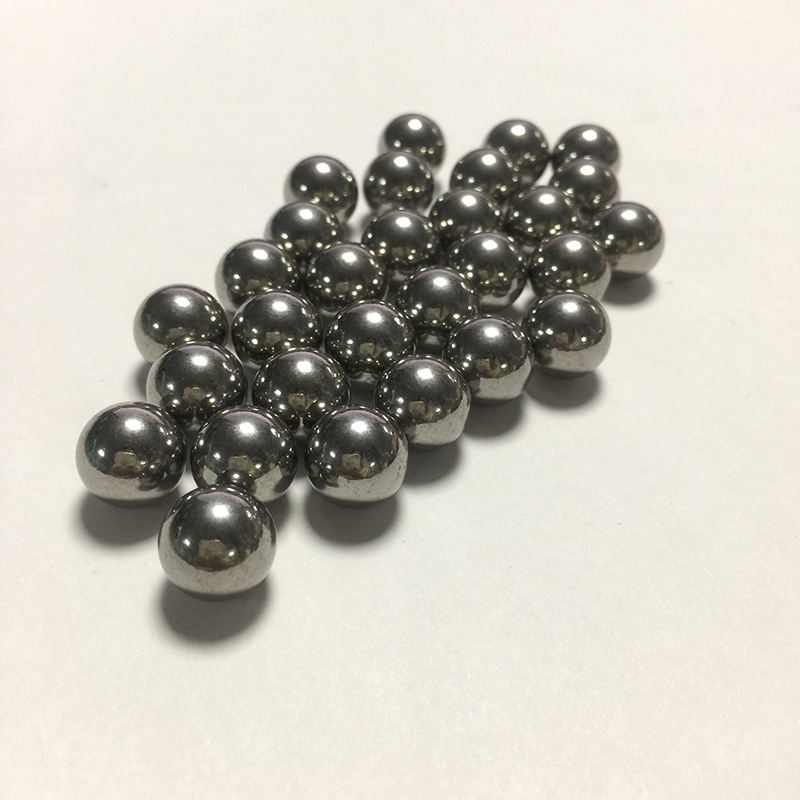
These solid metal balls provide a simple and controlled way to increase the mass of hollow or partially hollow 3D-printed parts. By filling internal voids with metal spheres, you can improve stability, balance, and perceived quality of printed objects without redesigning the model or switching to expensive high-density filaments.
Two diameters are available:
-
4.76 mm
-
7 mm
Each size is supplied in a jar with a measured bulk density for consistent and repeatable results:
-
7 mm balls: approx. 4.43 g/cc
-
4.76 mm balls: approx. 5.18 g/cc
The smaller diameter provides a higher packing density, making it better suited for compact cavities or when maximum weight per volume is required. The larger size is easier to handle and works well for bigger internal chambers.
Manufactured from solid chrome steel, the balls offer a uniform shape, a smooth surface finish, and a stable mass distribution. They can be used loose inside enclosed prints, combined with resin or epoxy for permanent ballast, or placed in printed compartments designed for fill material. These are premium ball bearings, which we purchased in bulk for 3D printing enthusiasts.
Typical applications include weighted bases, counterbalanced parts, fixtures, jigs, and any 3D-printed component where extra mass improves function or feel. To figure out how much you need, measure the size of the cavern you wish to fill, convert the volume to cubic centimeters (cc), and reference the table below.
For a higher effective density, the metal balls can be combined with dry fine sand. The balls provide mass, while the sand fills the air gaps between spheres. This increases total weight per volume and prevents movement or rattling inside hollow prints. For permanent ballast, the mixture can be locked in place using resin or epoxy.
See also: Fine Sand for 3D Print Filling – ideal companion product for maximum ballast in hollow prints.
⚖️ Weight Lookup Table — Balls Only vs Balls + Sand (approx.)
The weights in this table are calculated by multiplying the internal cavity volume by the bulk density of the balls (for example, to fill a 15 cc cavity with 4.76 mm balls: 15 cc × 5.18 g/cc ≈ 78 g of balls).
Using the calculated bulk densities:
-
4.76 mm balls (balls only): 5.18 g/cc
Estimated with sand fill: ≈ 5.7 g/cc -
7 mm balls (balls only): 4.43 g/cc
Estimated with sand fill: ≈ 5.1 g/cc
| Fill Volume | 4.76 mm (balls only) | 4.76 mm (balls + sand) | 7 mm (balls only) | 7 mm (balls + sand) |
|---|---|---|---|---|
| 10 cc | 52 g | 57 g | 44 g | 51 g |
| 25 cc | 130 g | 143 g | 111 g | 128 g |
| 50 cc | 259 g | 286 g | 222 g | 257 g |
| 100 cc | 518 g | 572 g | 443 g | 513 g |
| 150 cc | 777 g | 858 g | 665 g | 770 g |
| 200 cc | 1036 g | 1144 g | 886 g | 1026 g |
(Values rounded. Real-world packing will vary slightly.)
⚙️ Technical Details
| Feature | Specification |
|---|---|
| Diameters | 4.76 mm & 7 mm |
| Material | Solid chrome steel |
| Bulk density (7 mm) | 4.43 g/cc |
| Bulk density (4.76 mm) | 5.18 g/cc |
| Packaging | Clear jar, measured fill volume, 1 kg per jar |
| Intended use | Weighting and filling hollow 3D prints |